Security+ vs Other CompTIA Cybersecurity Certifications: Where Should You Start?
If you’re planning a career in cybersecurity, CompTIA offers one of the most structured and beginner-friendly certification pathways available. But even within the CompTIA ecosystem, you might find yourself asking: Should I start with Security+ or is another CompTIA certification a better entry point?
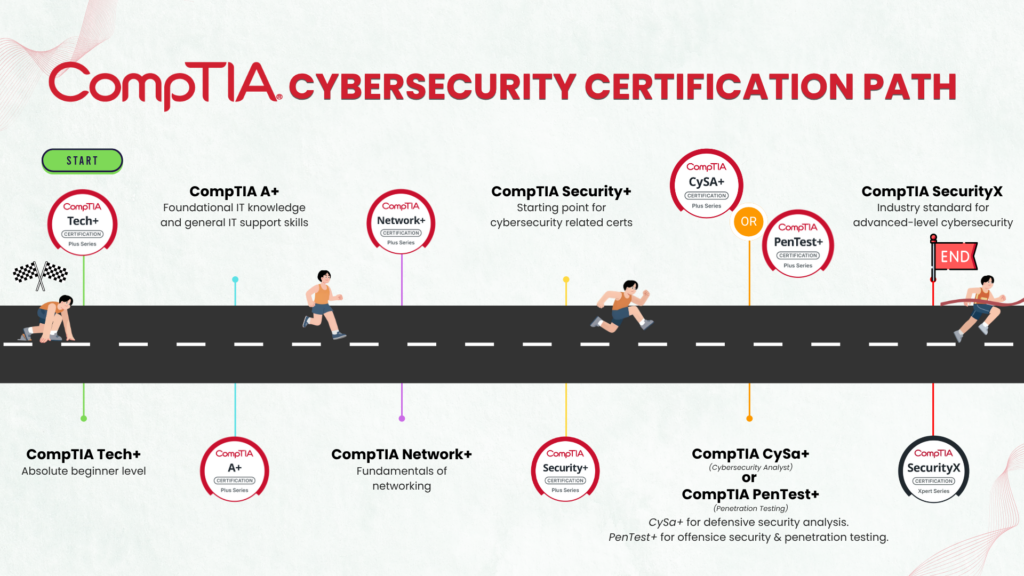
CompTIA certifications are designed to build on each other, creating a clear progression from beginner to advanced levels. In cybersecurity, the most relevant certifications include:
Tech+ : Absolute beginner level
A+ : General IT support skills
Network+ : Networking fundamentals
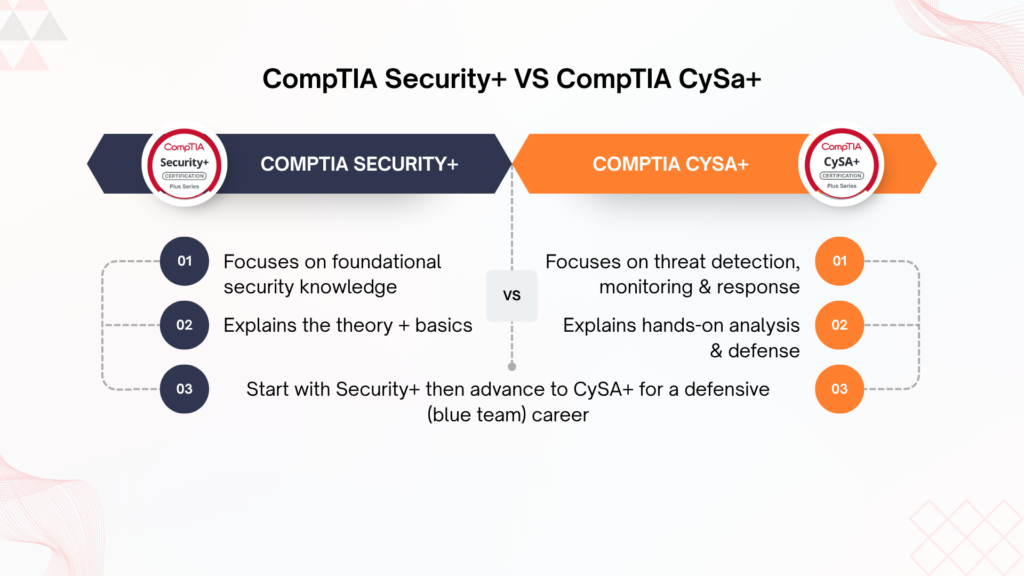
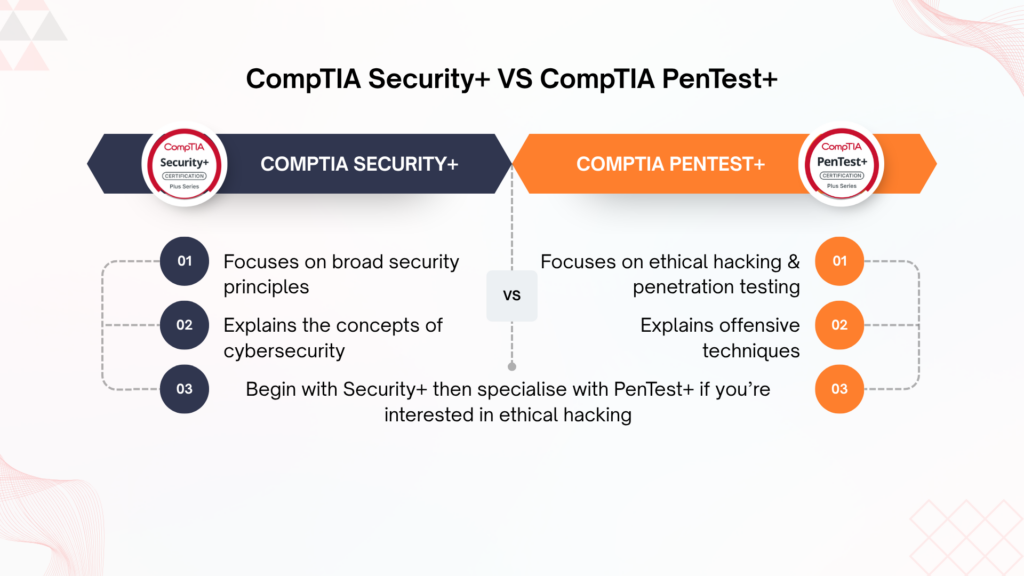
Security+ : The starting point for any cybersecurity related certifications with CompTIA. It is best for those who have basic IT or networking knowledge who want to move into cybersecurity.
CySA+ (Cybersecurity Analyst) : Defensive security and analysis
PenTest+ (Penetration Testing) : Offensive security and penetration testing
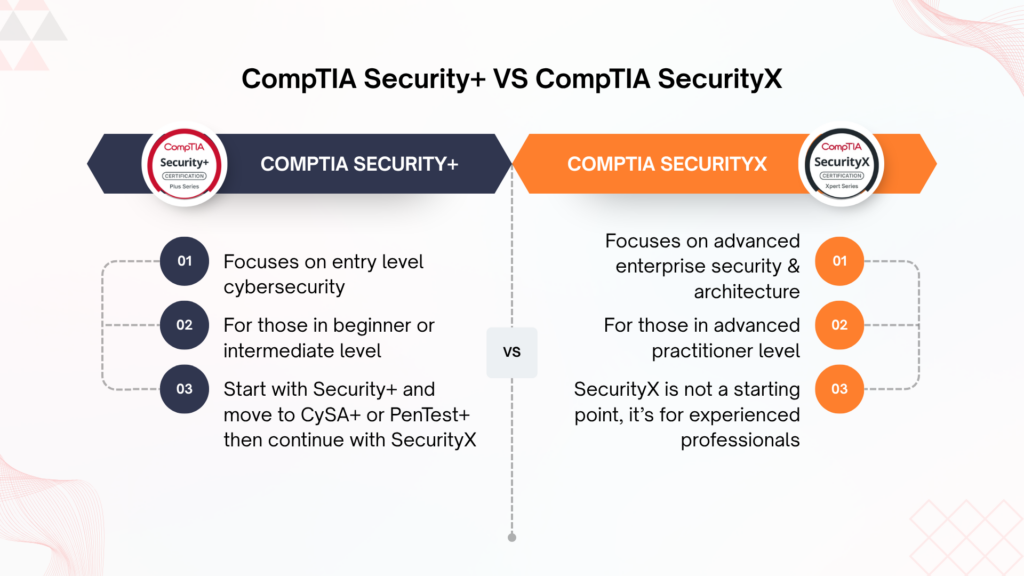
SecurityX : Industry standard for advanced-level cybersecurity
Each certification targets a different stage of your career. This article breaks down how Security+ compares to other CompTIA cybersecurity certifications and helps you decide where to begin.
Table of Contents
What Makes Security+ the Central Starting Point?
Security+ sits right in the middle of CompTIA’s pathway but it’s widely considered the entry point into cybersecurity.
It Bridges IT and Security
Unlike A+ or Network+, which focus on general IT skills, Security+ introduces you directly to cybersecurity concepts while still assuming only basic prior knowledge.
It Covers All Core Domains
Security+ provides a well-rounded foundation in:-
Threats and attacks
Network security
Identity and access management
Risk and compliance
Cryptography
This makes it ideal if you’re still exploring which area of cybersecurity interests you.
It Unlocks Career Paths
Many entry-level roles, such as security analyst, SOC analyst or IT security specialist list Security+ as a baseline requirement.
Comparing Security+ with other CompTIA Certifications
Security+ vs A+
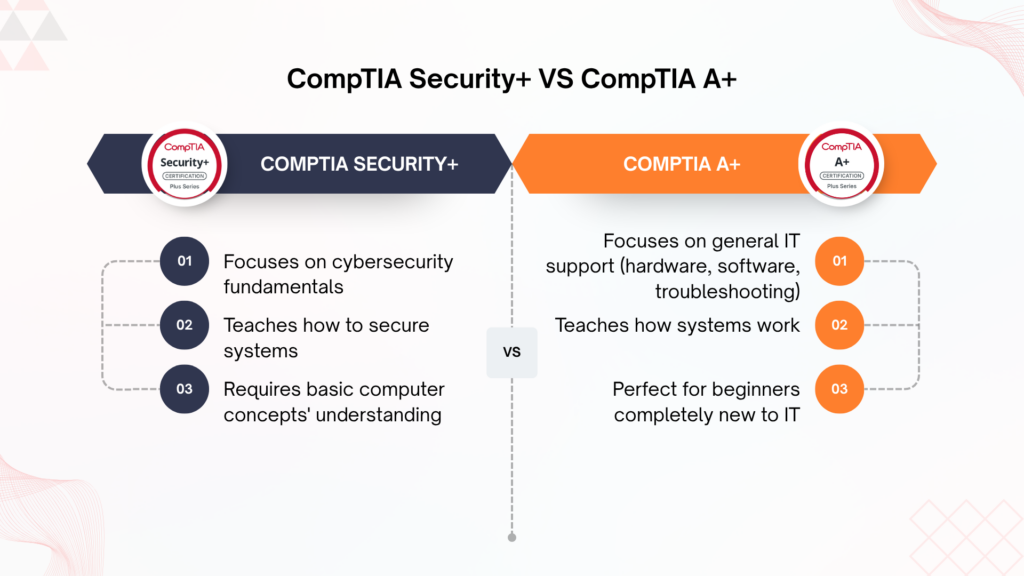
A+ Focus: General IT support (hardware, software, troubleshooting) Security+ Focus: Cybersecurity fundamentals
Key Difference:
A+ teaches you how systems work
Security+ teaches you how to secure them
Where to start:
Choose A+ if you’re completely new to IT
Choose Security+ if you already understand basic computer concepts
Security+ vs Network+
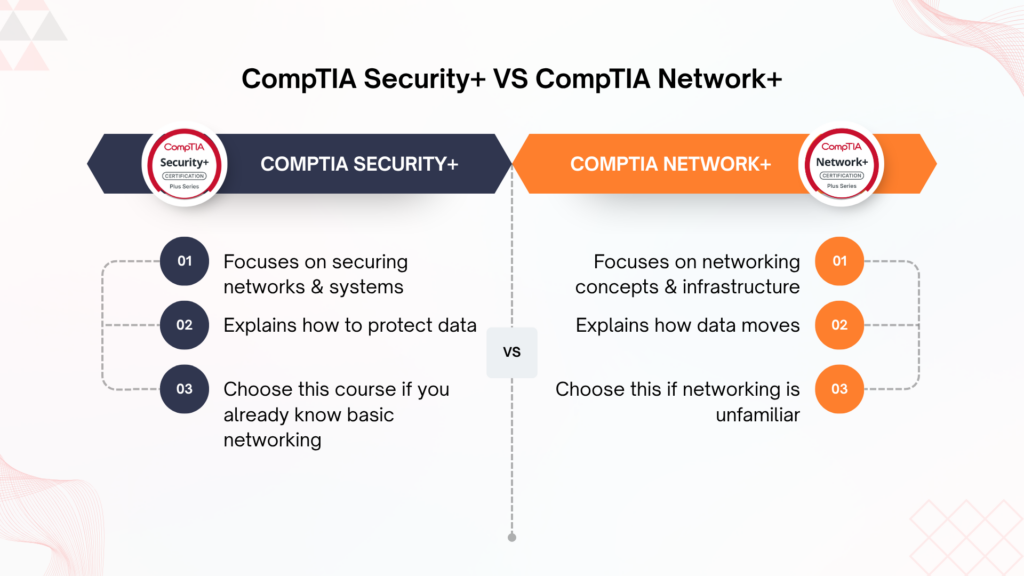
Network+ Focus: Networking concepts and infrastructure Security+ Focus: Securing networks and systems
Key Difference:
Network+ explains how data moves
Security+ explains how to protect that data
Where to start:
Start with Network+ if networking is unfamiliar
Go directly to Security+ if you already know basic networking
SecurityX+ is not a starting point, it’s for experienced professionals. Start with Security+, move to CySA+ or PenTest+ then continue with SecurityX.
When Should You Start with Security+?
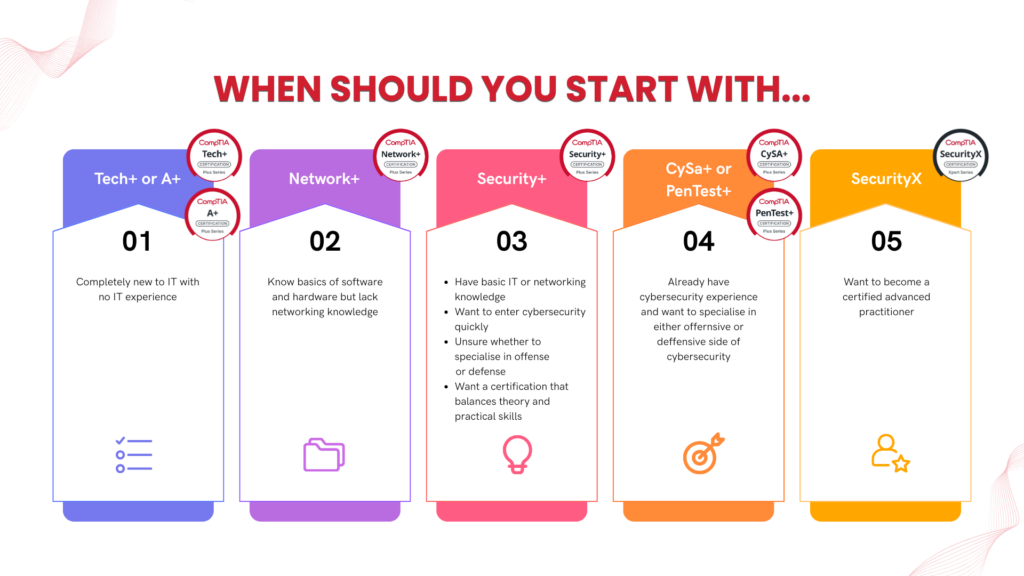
Security+ is the best starting point if:
You have basic IT or networking knowledge
You want to enter cybersecurity quickly
You’re unsure whether to specialize in offense or defense
You want a certification that balances theory and practical skills
When Should You Start Elsewhere?
You might want to begin with another CompTIA certification if:
You’re completely new to IT, then start with Tech+ or A+
You lack networking knowledge, then start with Network+
You already have security experience, then consider CySA+ or PenTest+
You want to become a certified advanced practitioner, then go for SecurityX
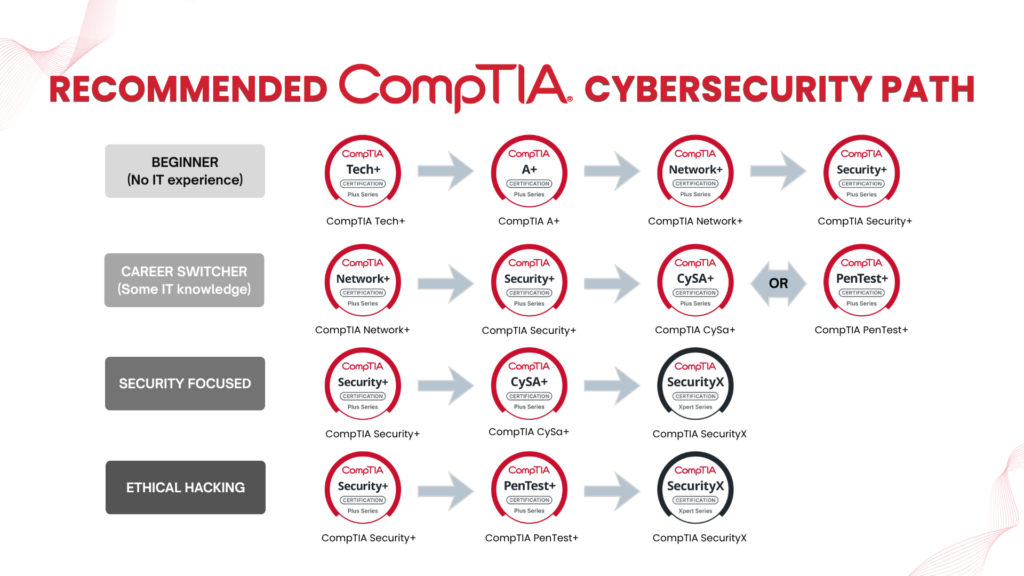
Recommended CompTIA Cybersecurity Path
Here’s a simple roadmap depending on your starting point:
Beginner (No IT Experience)
Tech+ → A+ → Network+ → Security+
Career Switcher (Some IT Knowledge)
Network+ → Security+ → CySA+ or PenTest+
Security-Focused Path
Security+ → CySA+ (defensive) → SecurityX
Ethical Hacking Path
Security+ → PenTest+ (offensive) → SecurityX
Final Thoughts
Within the CompTIA pathway, Security+ is the most logical and widely recommended starting point for cybersecurity. It’s not the easiest certification, but it’s the one that gives you the most flexibility and career value early on.
Think of Security+ as the foundation that everything else builds on. Once you earn it, you’ll have the clarity and confidence to choose your next step, whether that’s defending systems, testing vulnerabilities, or designing secure infrastructures.