


Login / Register

In today’s cybersecurity landscape, certifications are more than just résumé boosters, they’re often gateways into specialized roles and proof of real-world capability. Among the many options available, two certifications frequently compared
are CompTIA PenTest+ and the Certified Ethical Hacker (CEH). Both are designed to validate skills in offensive security, but they differ in structure, depth, and intended audience. If you’re deciding between them, it’s worth taking a closer look at how they stack up in practice.
What Each Certification Is About
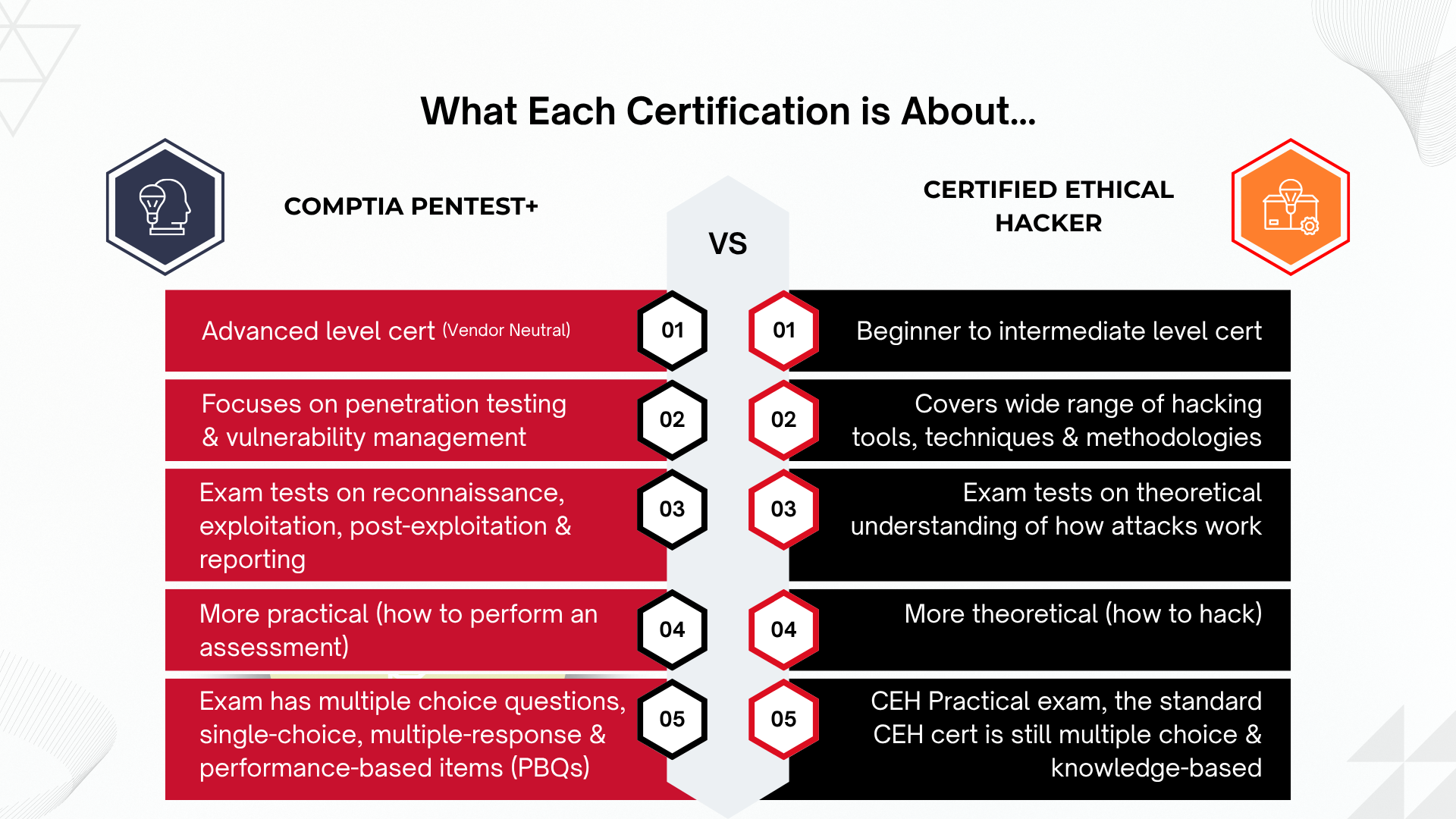
CompTIA PenTest+ is an advanced level certification focused on penetration testing and vulnerability management. It’s part of CompTIA’s broader certification pathway and is known for being vendor neutral. The exam is designed to test your ability to
actually perform tasks such as reconnaissance, exploitation, post-exploitation and reporting. In other words, it’s not just about knowing what to do, it’s about demonstrating that you can do it.
The Certified Ethical Hacker (CEH), offered by EC-Council, has been around longer and is one of the most recognized cybersecurity certifications globally. It covers a wide range of hacking tools, techniques, and methodologies, providing candidates with a solid theoretical understanding of how attacks work. While EC-Council has introduced a CEH Practical exam, the standard CEH certification is still largely multiple-choice and knowledge-based.
Hands-On Skills vs Conceptual Knowledge
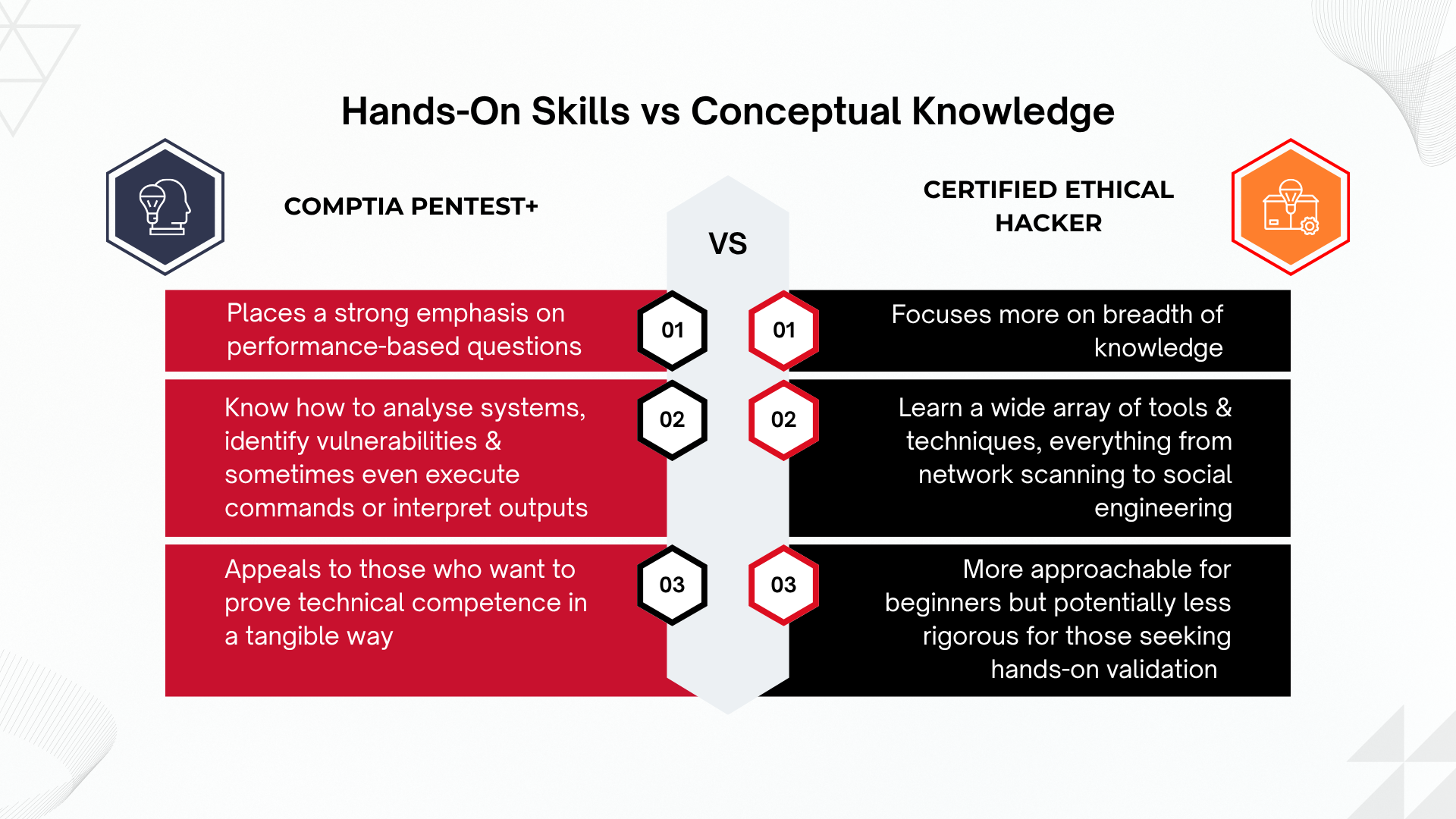
One of the biggest distinctions between PenTest+ and CEH lies in how they assess candidates. PenTest+ places a strong emphasis on performance-based questions. These simulate real-world scenarios where you must analyse systems, identify
vulnerabilities and sometimes even execute commands or interpret outputs. This approach appeals to those who want to prove technical competence in a tangible way.
CEH, by contrast, focuses more on breadth of knowledge. You’ll learn about a wide array of tools and techniques, everything from network scanning to social engineering, but you may not necessarily perform these actions during the exam.
This makes CEH more approachable for beginners but potentially less rigorous for those seeking hands-on validation.
Difficulty and Learning Curve
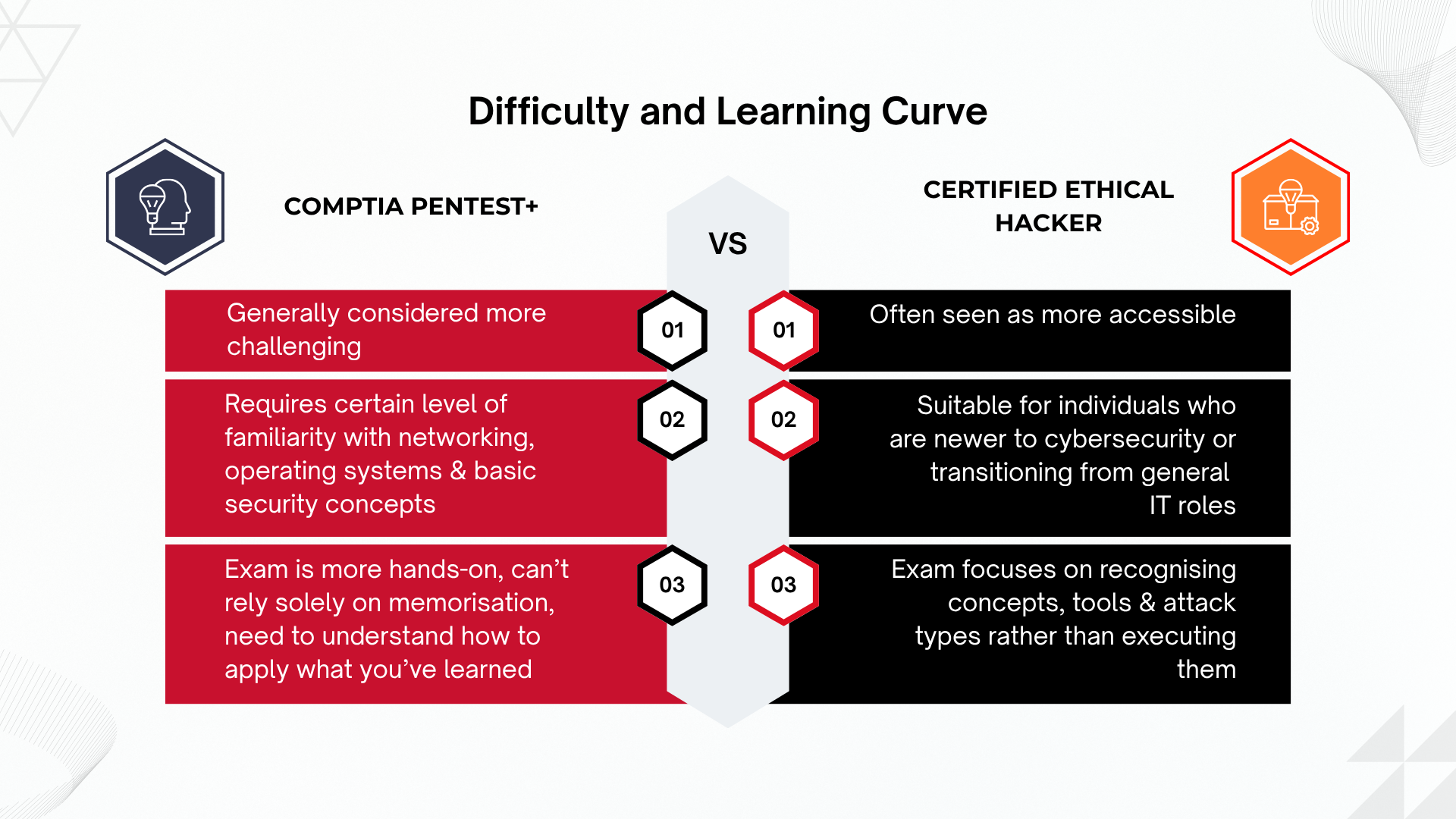
The perceived difficulty of each certification often depends on your background. PenTest+ is generally considered more challenging because it assumes a certain level of familiarity with networking, operating systems, and basic security concepts.
The hands-on nature of the exam means you can’t rely solely on memorisation; you need to understand how to apply what you’ve learned.
CEH, on the other hand, is often seen as more accessible. It’s suitable for individuals who are newer to cybersecurity or transitioning from general IT roles. The exam focuses on recognising concepts, tools, and attack types rather than executing them, which lowers the barrier to entry.
That said, neither certification should be underestimated. Both require dedicated
study and a solid grasp of cybersecurity fundamentals.
Industry Recognition and Employer Perception
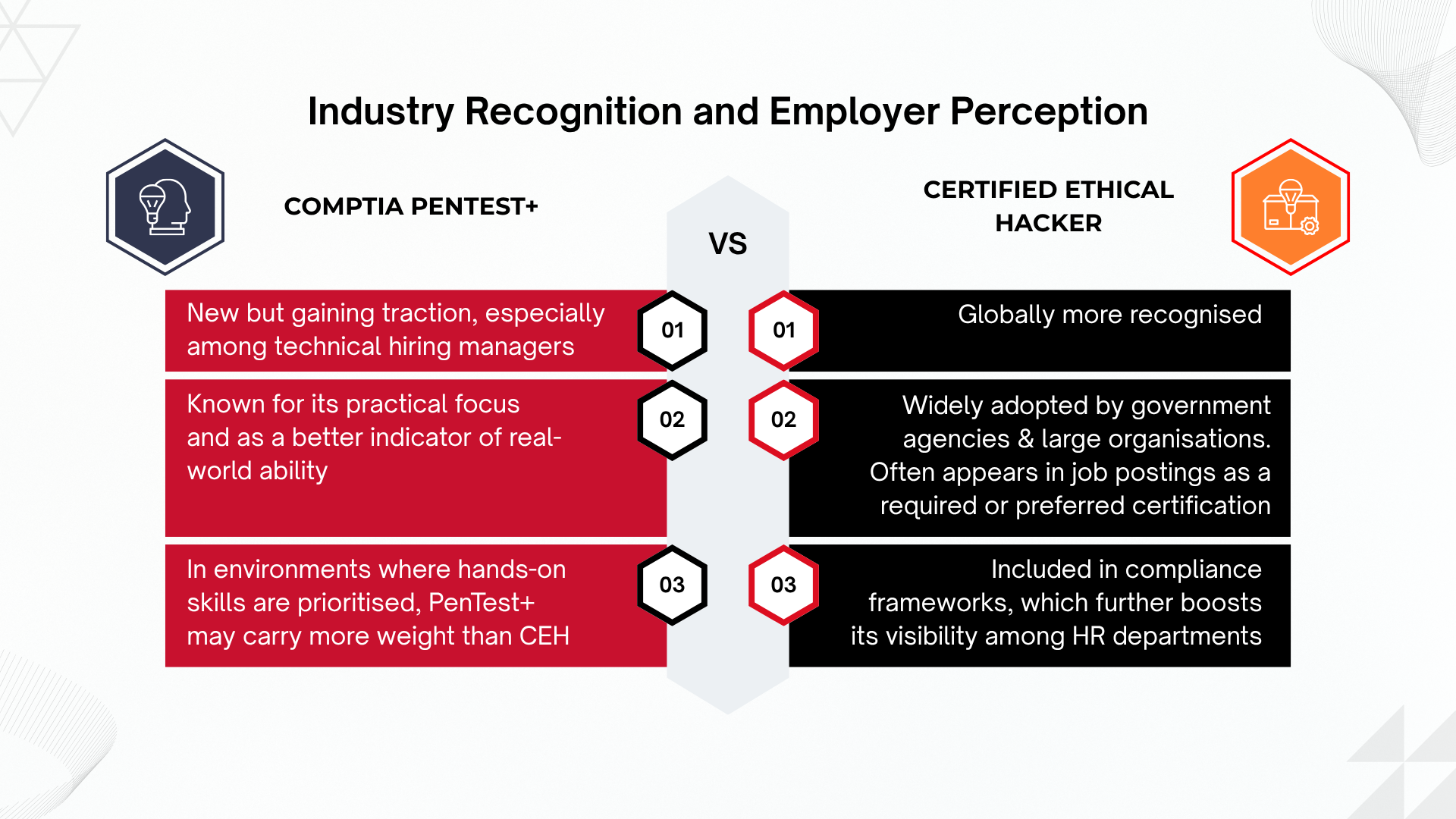
CEH has a clear advantage when it comes to name recognition. It has been widely adopted by government agencies and large organisations, and it often appears in job postings as a required or preferred certification. In some cases, it’s included in
compliance frameworks, which further boosts its visibility among HR departments.
PenTest+, while newer, is gaining traction, especially among technical hiring managers. Many professionals appreciate its practical focus and see it as a better indicator of real-world ability. In environments where hands-on skills are prioritized,
PenTest+ may carry more weight than CEH.
Career Path Alignment
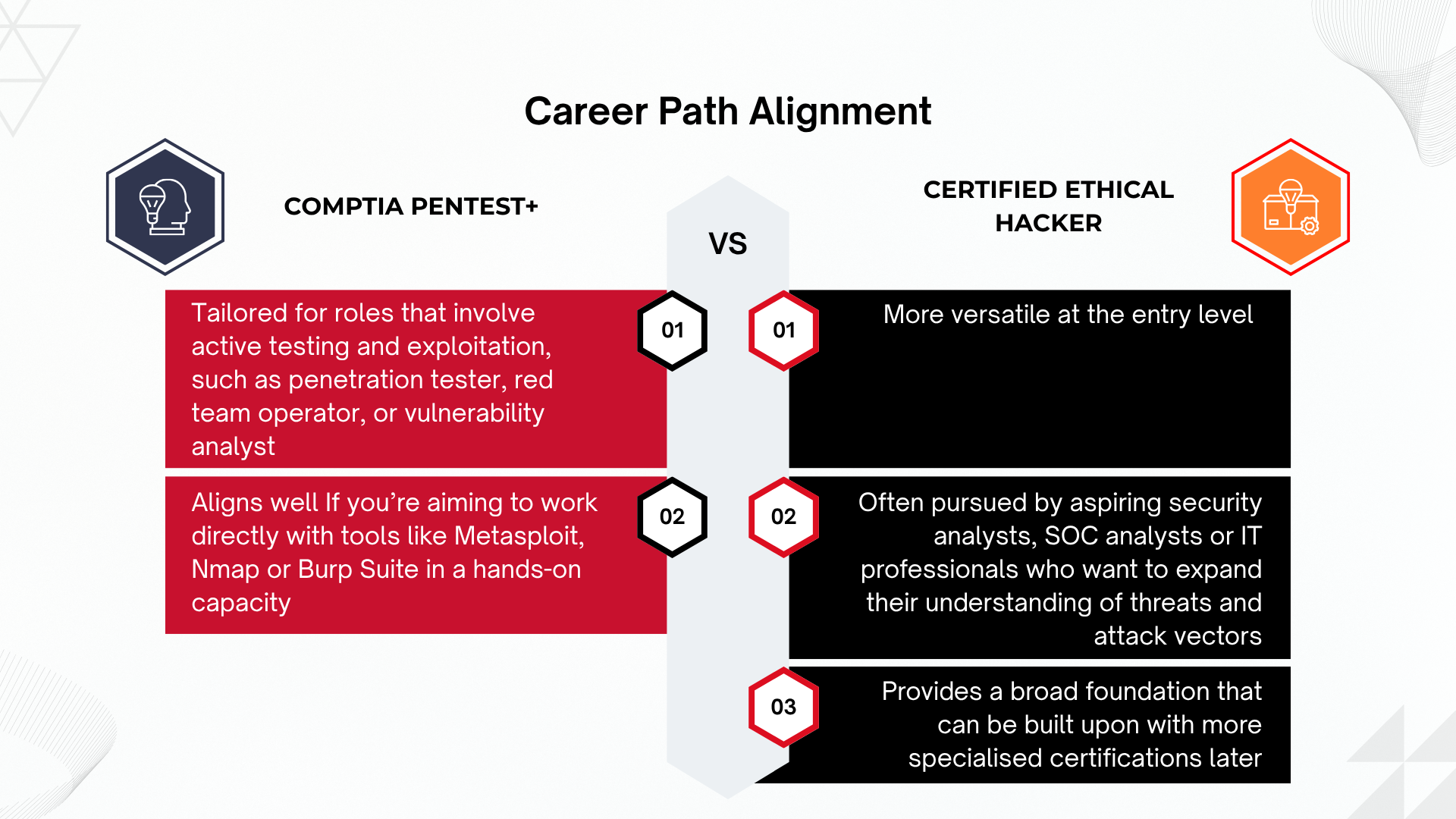
Your career goals should play a major role in your decision. PenTest+ is tailored for roles that involve active testing and exploitation, such as penetration tester, red team operator, or vulnerability analyst. If you’re aiming to work directly with tools like Metasploit, Nmap, or Burp Suite in a hands-on capacity, PenTest+ aligns well with that path.
CEH, meanwhile, is more versatile at the entry level. It’s often pursued by aspiring security analysts, SOC analysts, or IT professionals who want to expand their understanding of threats and attack vectors. It provides a broad foundation that can
be built upon with more specialised certifications later.
Exam Structure and Format
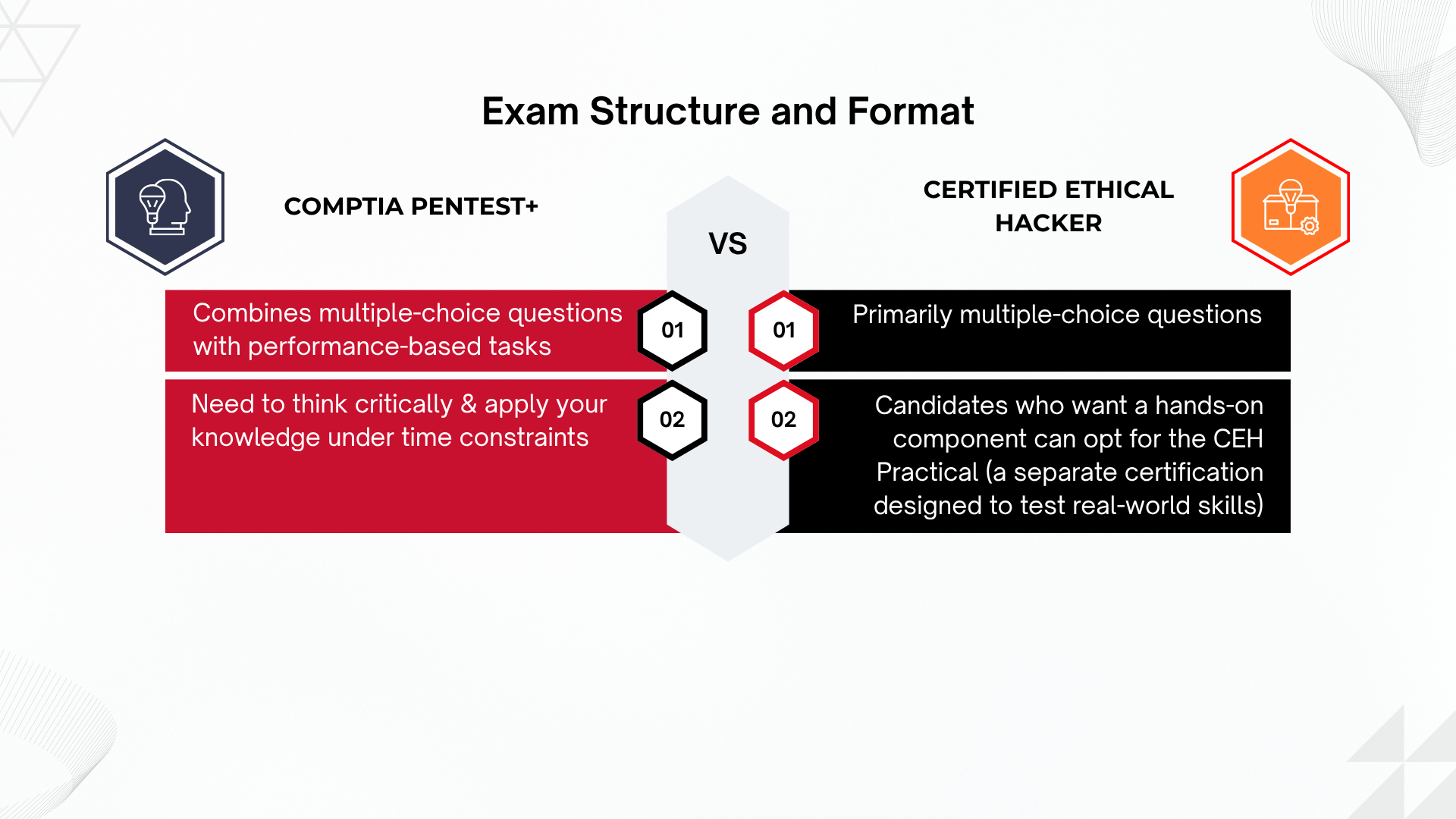
PenTest+ combines multiple-choice questions with performance-based tasks, creating a more dynamic testing experience. You’ll need to think critically and apply your knowledge under time constraints.
CEH’s standard exam is primarily multiple-choice, which makes it more predictable in format. However, candidates who want a hands-on component can opt for the CEH Practical, which is a separate certification designed to test real-world skills.
Cost and Accessibility
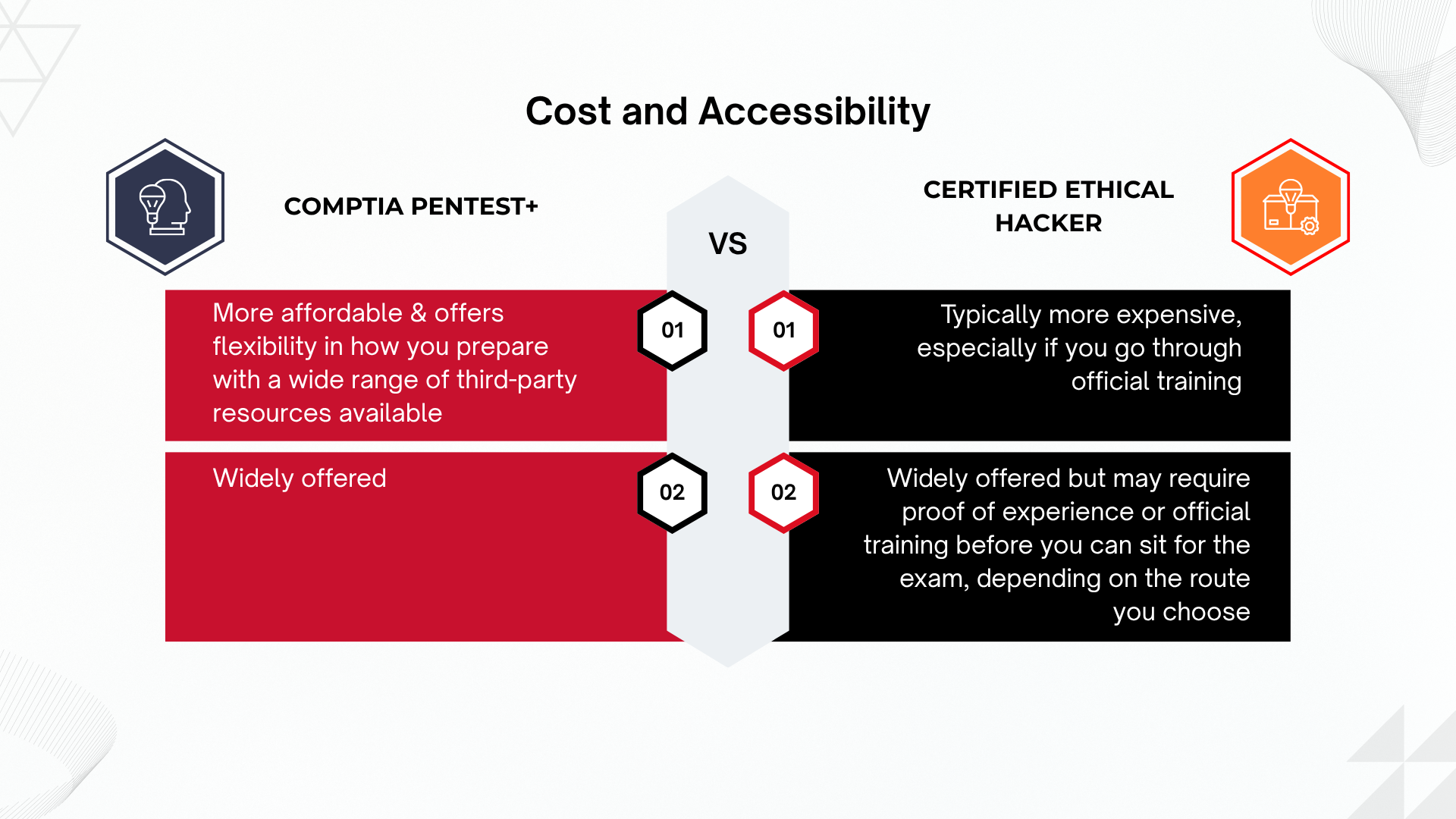
Cost can also be a deciding factor. CEH is typically more expensive, especially if you go through official training. PenTest+ is generally more affordable and offers flexibility in how you prepare with a wide range of third-party resources available.
Accessibility-wise, both certifications are widely offered, but CEH may require proof of experience or official training before you can sit for the exam, depending on the route you choose.
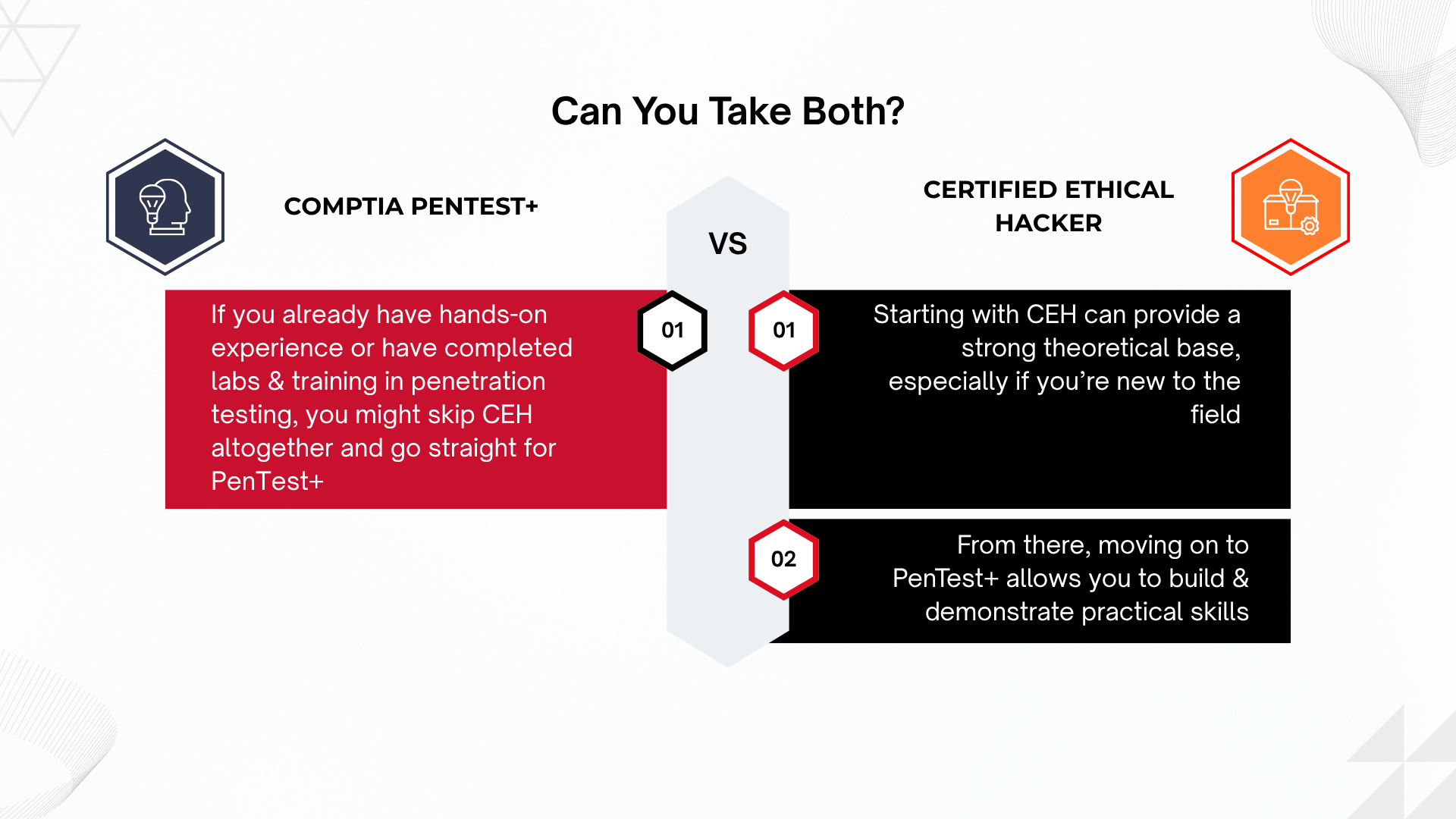
Can You Take Both?
Many cybersecurity professionals choose not to treat this as an either-or decision. Starting with CEH can provide a strong theoretical base, especially if you’re new to the field. From there, moving on to PenTest+ allows you to build and demonstrate
practical skills.
Alternatively, if you already have hands-on experience or have completed labs and training in penetration testing, you might skip CEH altogether and go straight for PenTest+.
Conclusion
Choosing between PenTest+ and CEH ultimately comes down to your current skill level and career direction. If you’re looking for a certification that emphasizes real-world application and technical depth, PenTest+ is likely the better fit. If you need a widely recognized credential that covers the fundamentals of ethical hacking, CEH remains a strong option.
Both certifications have value, and neither is inherently “better” than the other, they simply serve different purposes. By aligning your choice with your goals, you’ll get far more out of whichever path you take.
Ready to Start Your Journey?
Take advantage of HRDC claims and PERKESO EIS training or self-pay with instalment methods at Infosyte.
Contact us for more information on funding and available courses for each funding method.
Check out our ongoing sales and discounts and register for CompTIA Courses today.
Limited slots available.