Login / Register

Shopping cart

BLOG DETAILS

Blog Details

11:24 am

The ROI of Cybersecurity Certifications for IT Professionals

As cyber threats continue to grow in sophistication, organisations are investing more heavily than ever in cybersecurity talent. For entry-level IT professionals looking to build a successful career, earning cybersecurity certifications is one of the most effective ways to increase employability, develop practical skills and improve long-term earning potential.

But certifications require both time and money. Exam fees, study materials and preparation can represent a significant investment, especially for those just starting their careers. This naturally raises an important question:

Are cybersecurity certifications worth the investment?

The answer is yes. When you choose certifications that align with your career goals and complement them with practical, hands-on experience. In this article, we’ll explore the return on investment (ROI) of cybersecurity certifications and how they can accelerate your IT career.

What Does ROI Mean for Cybersecurity Certifications?

Return on Investment (ROI) is more than simply earning a higher salary after passing an exam. For IT professionals, the value of a certification includes both financial and professional benefits.

A cybersecurity certification can provide:

  • Increased job opportunities
  • Higher earning potential
  • Greater technical knowledge
  • Improved confidence during interviews
  • Recognition from employers
  • A stronger foundation for career progression

While salary increases are often the most visible benefit, certifications also open doors to roles that may otherwise be difficult to access.

Why Employers Value Cybersecurity Certifications

Recruiters and hiring managers often receive hundreds of applications for entry-level IT positions. Certifications provide an objective way to demonstrate that a candidate has invested time in learning industry-recognized skills.

For employers, certifications indicate that a candidate has:

  • A structured understanding of cybersecurity concepts
  • Commitment to professional development
  • Knowledge aligned with industry best practices
  • The motivation to continue learning

Although certifications are rarely a substitute for experience, they can significantly strengthen a resume and help candidates stand out during the hiring process.

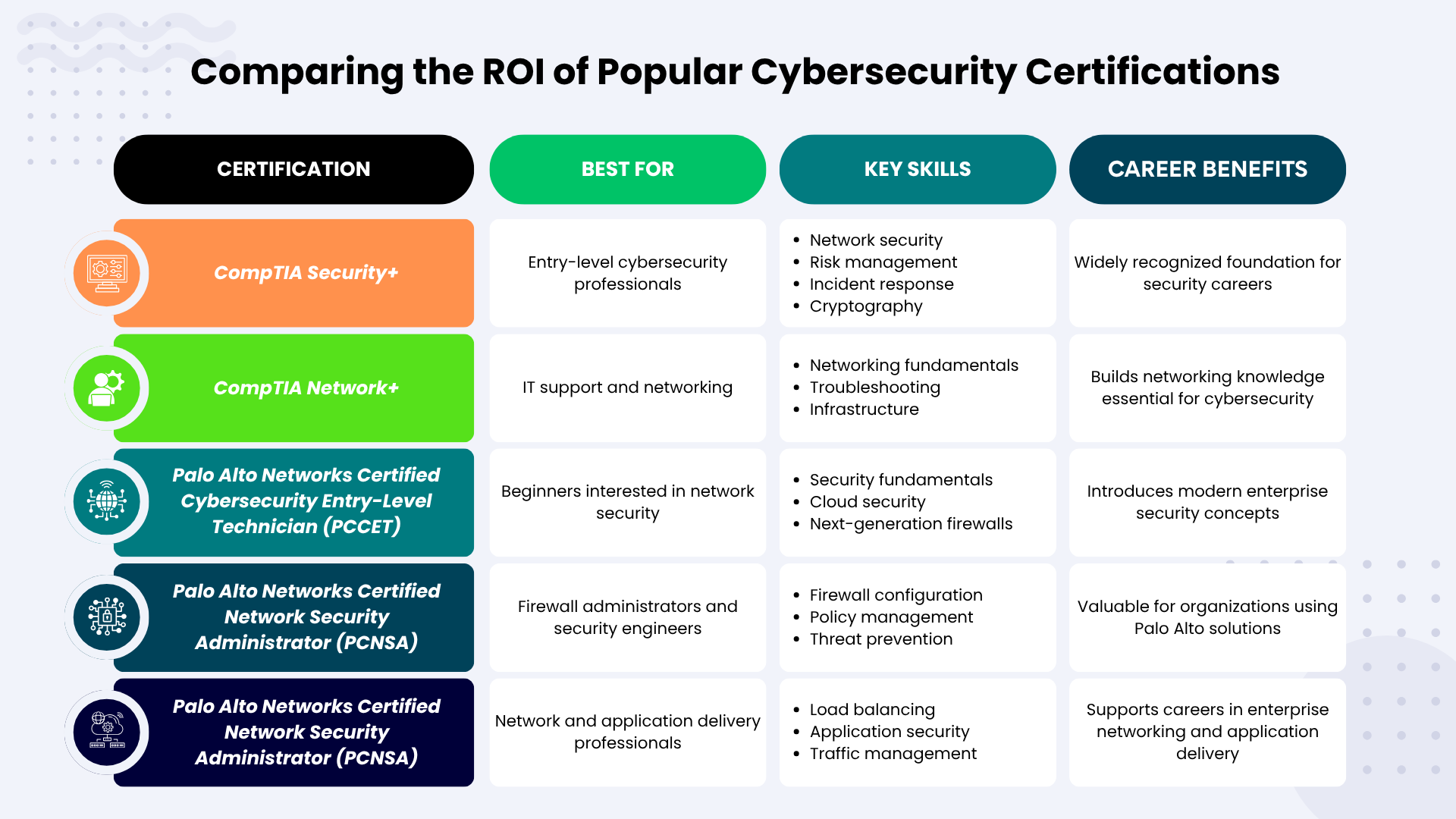
Comparing the ROI of Popular Cybersecurity Certifications

Different certifications support different career paths. Choosing the right certification depends on your interests and the technologies you want to work with.

CertificationBest ForKey SkillsCareer Benefits
CompTIA Security+Entry-level cybersecurity professionalsNetwork security, risk management, incident response, cryptographyWidely recognized foundation for security careers
CompTIA Network+IT support and networkingNetworking fundamentals, troubleshooting, infrastructureBuilds networking knowledge essential for cybersecurity
Palo Alto Networks Certified Cybersecurity Entry-Level Technician (PCCET)Beginners interested in network securitySecurity fundamentals, cloud security, next-generation firewallsIntroduces modern enterprise security concepts
Palo Alto Networks Certified Network Security Administrator (PCNSA)Firewall administrators and security engineersFirewall configuration, policy management, threat preventionValuable for organizations using Palo Alto solutions
F5 Certified BIG-IP Administrator (F5-CA)Network and application delivery professionalsLoad balancing, application security, traffic managementSupports careers in enterprise networking and application delivery

Each certification provides different value depending on your desired role, but all contribute to building technical credibility and expanding career opportunities.

Financial ROI: Salary and Career Growth

One of the primary reasons professionals pursue certifications is the potential for higher earnings. While salaries vary by country, industry, and experience level, certified professionals often enjoy advantages such as:

  • Better starting salaries
  • Faster promotions
  • Eligibility for specialized roles
  • Greater job security
    Access to consulting or contract opportunities
  • For entry-level professionals, certifications can shorten the path from general IT support roles into specialized cybersecurity positions.

Instead of spending several years waiting for opportunities, certified professionals often become eligible for security-focused positions much earlier in their careers.

Skills ROI: Building Practical Knowledge

The greatest value of cybersecurity certifications is often the knowledge gained while preparing for the exam.

Studying for certifications helps professionals understand topics such as:

  • Network security
  • Identity and access management
  • Firewall technologies
  • Security monitoring
  • Risk management
  • Secure network design
  • Threat detection
  • Incident response

These concepts become the foundation for more advanced cybersecurity skills throughout your career.

However, knowledge alone is not enough.

The highest ROI comes from combining certification study with practical experience through hands-on labs, virtual environments, and real-world scenarios.

Career ROI: Opening New Opportunities

Cybersecurity certifications can help professionals transition into roles such as:

  • Security Analyst
  • SOC Analyst
  • Network Security
  • Administrator
  • Firewall Administrator
  • IT Security Specialist
  • Junior Penetration Tester
  • Security Operations Engineer

As your experience grows, these certifications can also support progression into senior technical or leadership positions.

Many organizations use certifications as part of their hiring criteria, making them valuable even before your first cybersecurity job.

Maximizing the Return on Your Certification Investment

Passing an exam is only the first step. To maximize the value of your certification, continue building practical skills and professional experience.

Consider the following strategies:

  • Practice regularly using cybersecurity labs
  • Build a home lab to test networking and security concepts
  • Participate in Capture the Flag (CTF) challenges
  • Document personal projects on GitHub or a portfolio website
  • Stay current with evolving cybersecurity threats
  • Pursue additional certifications as your career progresses

Employers increasingly look for candidates who can demonstrate both theoretical knowledge and practical problem-solving skills.

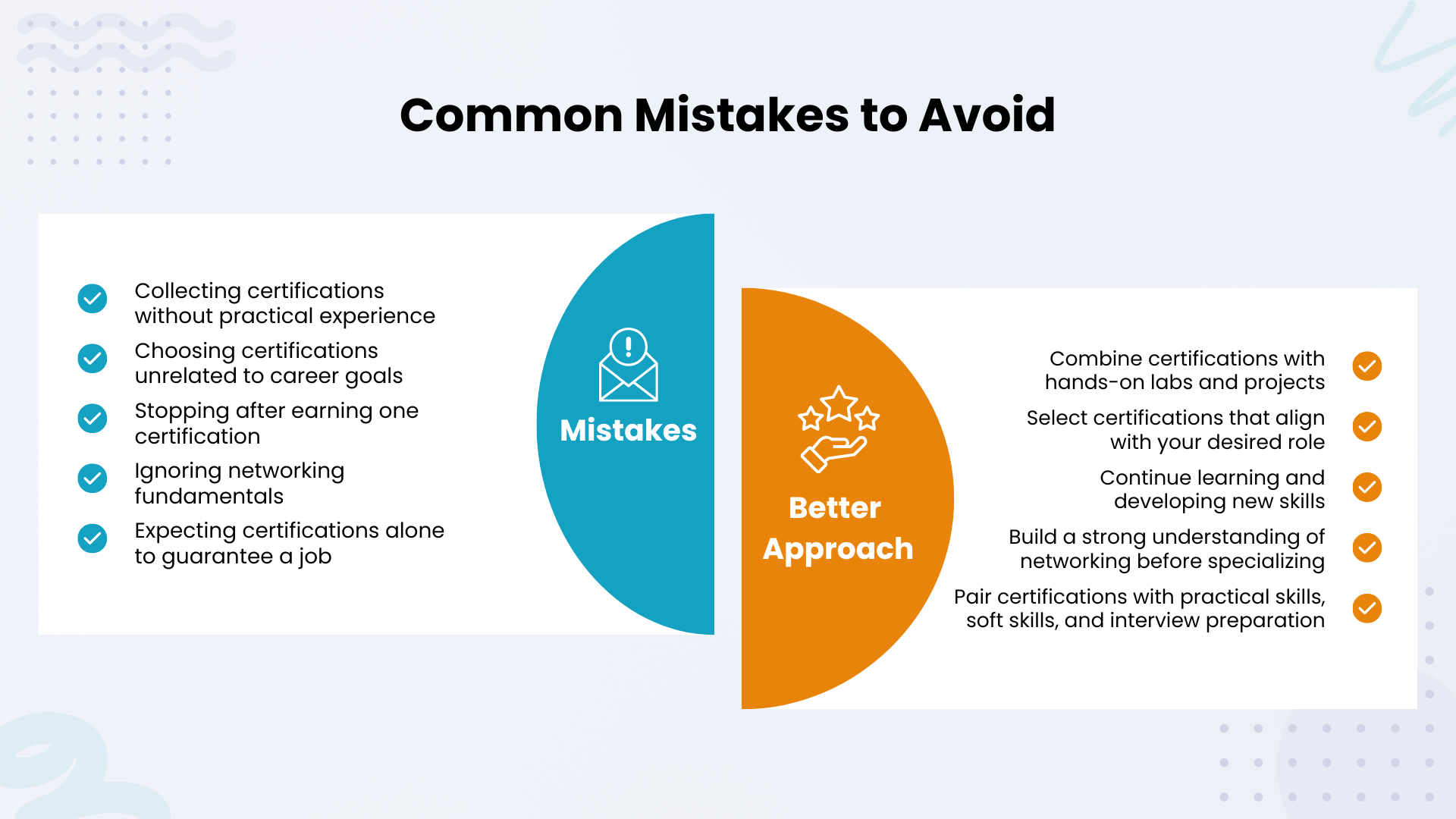
Common Mistakes to Avoid

While certifications are valuable, there are several misconceptions that can reduce their ROI.

Avoid these common mistakes:

MistakeBetter Approach
Collecting certifications without practical experienceCombine certifications with hands-on labs and projects
Choosing certifications unrelated to career goalsSelect certifications that align with your desired role
Stopping after earning one certificationContinue learning and developing new skills
Ignoring networking fundamentalsBuild a strong understanding of networking before specializing
Expecting certifications alone to guarantee a jobPair certifications with practical skills, soft skills, and interview preparation

A balanced approach will provide the greatest long-term career benefits.

Which Certification Should You Start With?

For most entry-level IT professionals, the following learning path offers an excellent balance of foundational knowledge and practical relevance:

  1. CompTIA Network+ – Build a strong understanding of networking fundamentals.
  2. CompTIA Security+ – Develop core cybersecurity knowledge recognized across the industry.
  3. Palo Alto PCCET – Learn modern cybersecurity concepts and enterprise security technologies.
  4. Palo Alto PCNSA or F5 Certified BIG-IP Administrator – Specialize based on your career interests and the technologies used by your target employers.

This progression helps build confidence while gradually introducing more advanced concepts.

Conclusion

Cybersecurity certifications offer an excellent return on investment for entry-level IT professionals. Beyond increasing earning potential, they demonstrate commitment, validate technical knowledge, and improve employability in a competitive job market.

Certifications from organizations such as CompTIA, Palo Alto Networks, and F5 provide a strong foundation for careers in networking and cybersecurity. However, the greatest ROI comes from combining certification study with practical, hands-on experience.

As cybersecurity continues to evolve, employers are looking for professionals who can both understand security concepts and apply them in real-world situations. By investing in the right certifications and continuously developing your skills, you can build a rewarding career while creating long-term value for both yourself and future employers.

Frequently Asked Questions (FAQ)

Yes. Certifications help beginners build foundational knowledge, strengthen their resumes, and improve their chances of securing entry-level cybersecurity roles.

For most aspiring cybersecurity professionals, CompTIA Network+ followed by CompTIA Security+ provides an excellent starting point before moving into vendor-specific certifications.

No. Certifications improve your qualifications, but employers also value practical experience, communication skills, and problem-solving ability.

Both have value. Vendor-neutral certifications like CompTIA build broad foundational knowledge, while vendor-specific certifications such as Palo Alto and F5 demonstrate expertise with technologies used in enterprise environments.

Related Posts