As artificial intelligence, cloud computing, cybersecurity and digital transformation continue to reshape businesses, IT professionals are being asked to deliver more than just technical support. Today’s organisations expect IT teams to create business value, manage digital services effectively, govern emerging technologies and support continual improvement.
That’s why the evolution of ITIL remains highly relevant.
For years, ITIL has been the world’s most widely adopted framework for IT Service Management (ITSM). Most Malaysian enterprises, financial institutions, telecommunications companies, government agencies and technology service providers use ITIL principles to improve service delivery and operational efficiency.
Now, with the emergence of ITIL Version 5 guidance and updates from PeopleCert and AXELOS, professionals are looking to understand what’s changing and how these developments impact their careers.
This guide explains the latest ITIL developments, what remains important from ITIL 4, and what Malaysian IT professionals should know moving forward.
What Is ITIL?
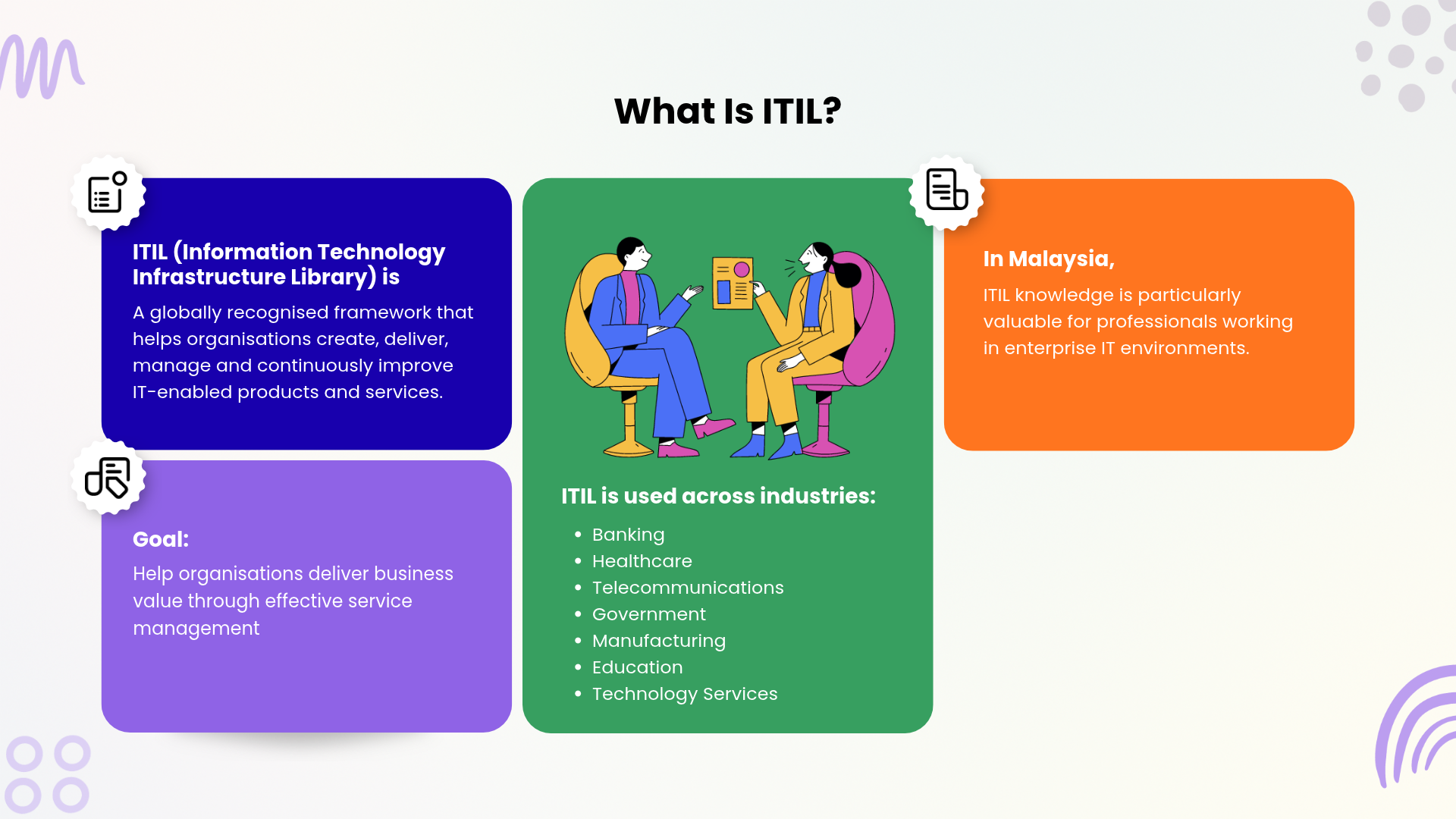
ITIL (Information Technology Infrastructure Library) is a globally recognised framework that helps organisations create, deliver, manage and continuously improve IT-enabled products and services.
Rather than prescribing rigid processes, ITIL provides best-practice guidance that organisations can adapt to their specific environments.
Its goal is simple:
Help organisations deliver business value through effective service management.
ITIL is used across industries including:
- Banking
- Healthcare
- Telecommunications
- Government
- Manufacturing
- Education
- Technology Services
In Malaysia, ITIL knowledge is particularly valuable for professionals working in enterprise IT environments.
Is There an Official ‘ITIL® Version 5’ Certification?
This is one of the most common questions currently being searched online.
The important distinction is:
As of 2026, the core certification framework remains ITIL 4.
However, PeopleCert and AXELOS have introduced updated guidance and specialised publications, including ITIL AI Governance (Version 5), which addresses governance, risk management and business value creation in AI-enabled environments.
Therefore, when professionals refer to ‘ITIL® Version 5’, they are often referring to:
- New ITIL guidance releases
- Updated practice guides
- ITIL AI Governance Version 5
- Modernised service management approaches that build upon the ITIL 4 framework
Rather than replacing ITIL 4, these developments extend and enhance it.
What's New in the Latest ITIL Developments?
1. Stronger Focus on AI Governance
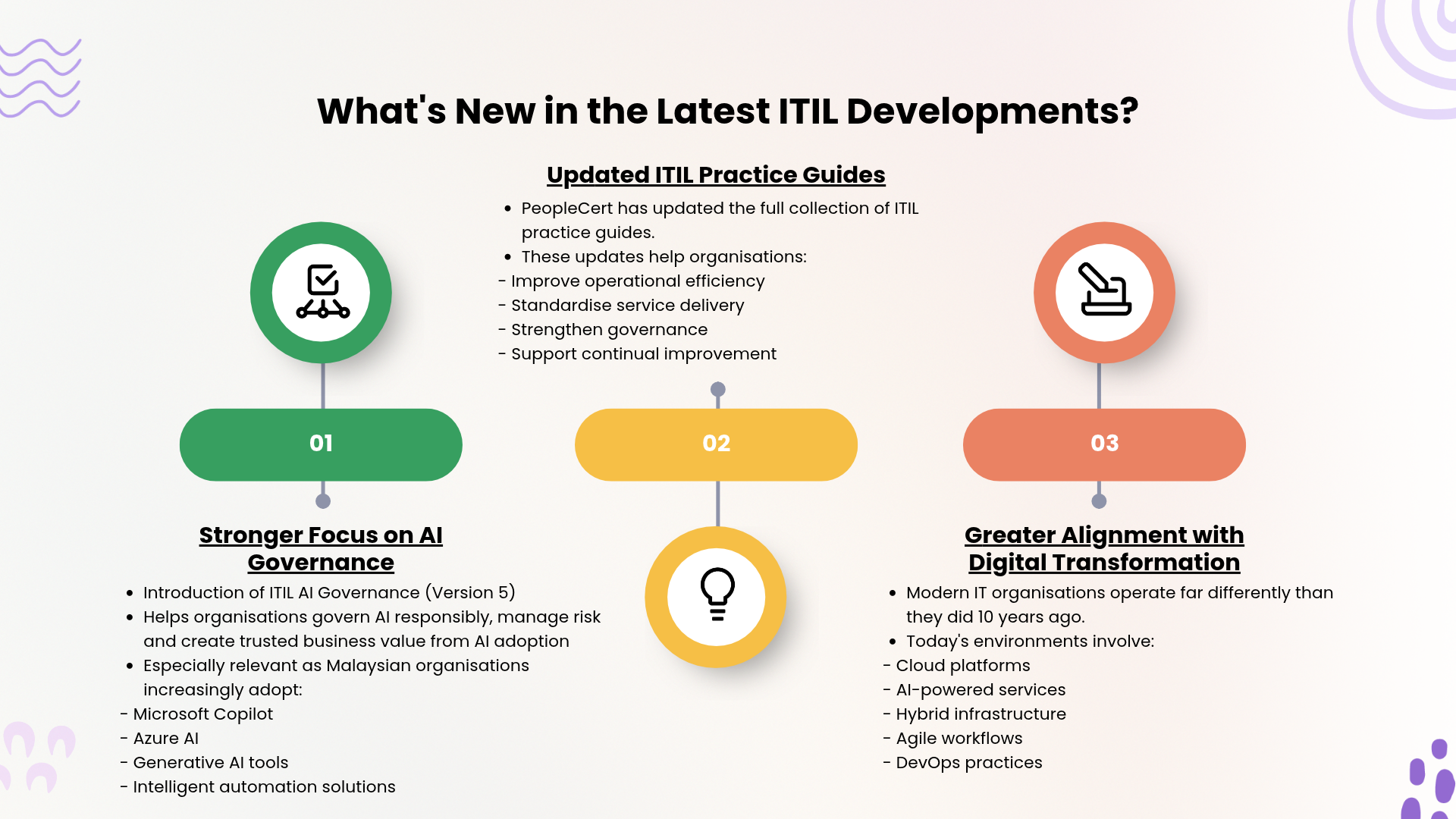
One of the biggest developments is the introduction of ITIL AI Governance (Version 5).
According to AXELOS, this guidance helps organisations govern AI responsibly, manage risk and create trusted business value from AI adoption.
This is especially relevant as Malaysian organisations increasingly adopt:
- Microsoft Copilot
- Azure AI
- Generative AI tools
- Intelligent automation solutions
IT professionals are no longer expected to simply support technology. They must also help govern and manage it responsibly.
2. Updated ITIL Practice Guides
PeopleCert has updated the full collection of ITIL practice guides, including enhancements, additional recommendations, revised formats and practical implementation guidance.
These updates help organisations:
- Improve operational efficiency
- Standardise service delivery
- Strengthen governance
- Support continual improvement
For practitioners, the updated guidance provides more actionable approaches to real-world service management challenges.
3. Greater Alignment with Digital Transformation
Modern IT organisations operate far differently than they did 10 years ago.
Today’s environments involve:
- Cloud platforms
- AI-powered services
- Hybrid infrastructure
- Agile workflows
- DevOps practices
The latest ITIL updates continue emphasising flexibility, collaboration and value creation rather than rigid process compliance.
Key ITIL Concepts That Still Matter
Even with new guidance, the foundation of ITIL remains highly relevant.
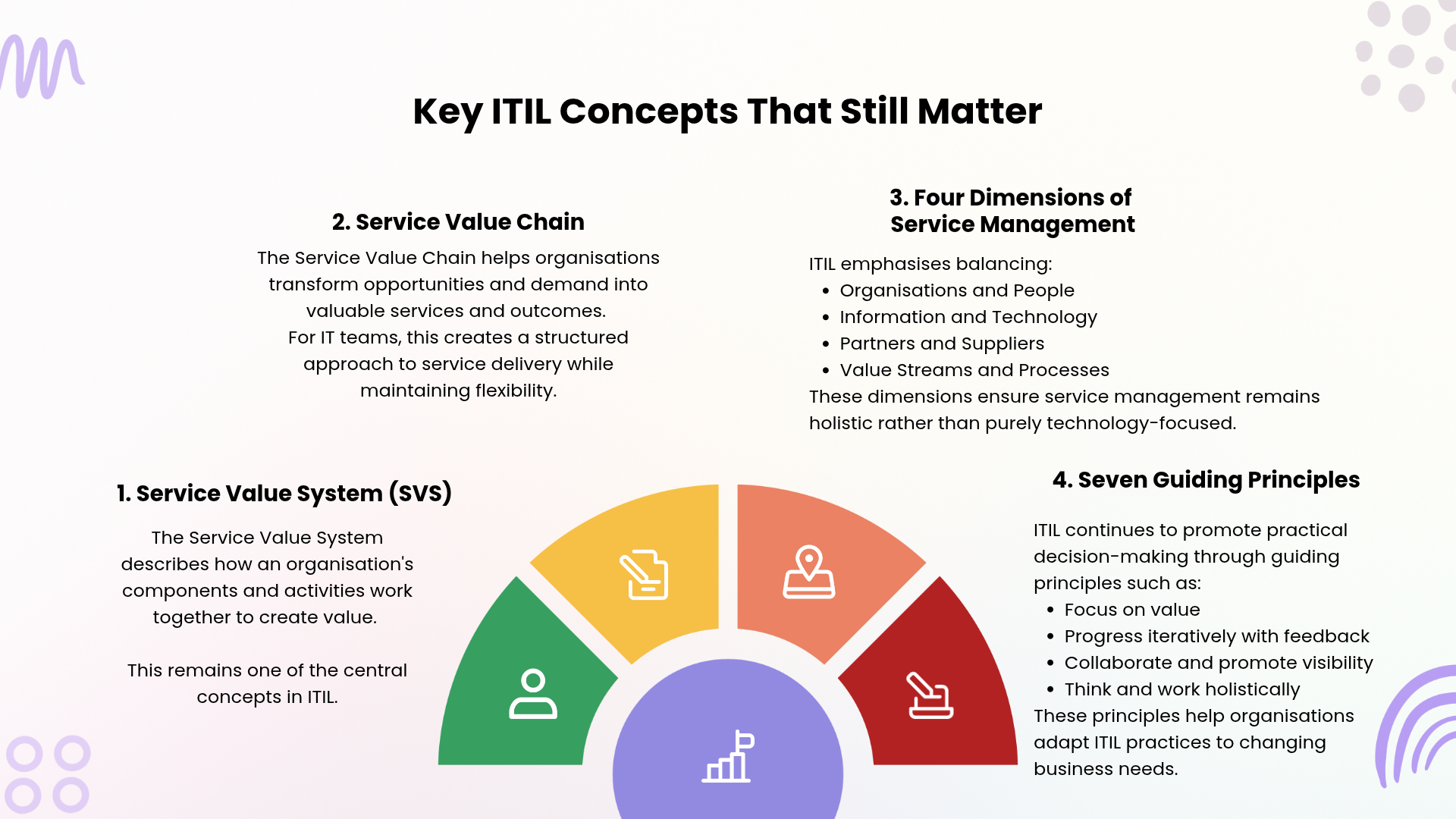
Service Value System (SVS)
The Service Value System describes how an organisation’s components and activities work together to create value.
This remains one of the central concepts in ITIL.
Service Value Chain
The Service Value Chain helps organisations transform opportunities and demand into valuable services and outcomes.
For IT teams, this creates a structured approach to service delivery while maintaining flexibility.
Four Dimensions of Service Management
ITIL emphasises balancing:
- Organisations and People
- Information and Technology
- Partners and Suppliers
- Value Streams and Processes
These dimensions ensure service management remains holistic rather than purely technology-focused.
Seven Guiding Principles
ITIL continues to promote practical decision-making through guiding principles such as:
- Focus on value
- Progress iteratively with feedback
- Collaborate and promote visibility
- Think and work holistically
These principles help organisations adapt ITIL practices to changing business needs.
Why ITIL Still Matters for Malaysian IT Professionals
Some professionals assume that cloud certifications and AI certifications have replaced service management certifications.
The reality is quite different.
Organisations still need professionals who can:
- Manage service quality
- Improve user experience
- Govern technology services
- Align IT with business goals
- Deliver measurable value
This is where ITIL remains highly relevant.
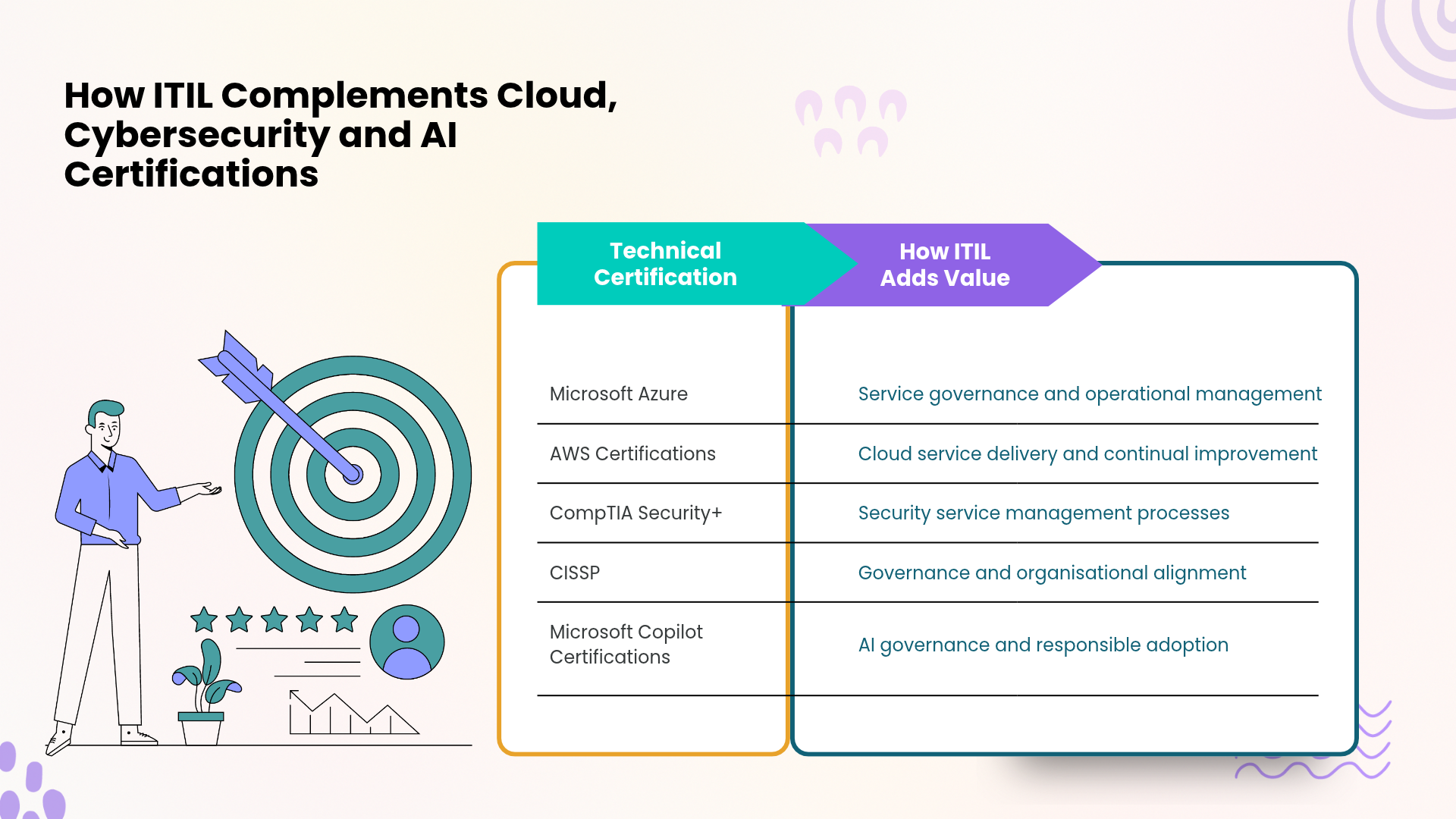
ITIL Supports Modern Technologies
Whether you’re working with:
- Microsoft Azure
- Amazon Web Services (AWS)
- Microsoft 365
- Cybersecurity platforms
- AI systems
You still need structured service management practices.
ITIL helps bridge the gap between technology implementation and business outcomes.
Why ITIL Still Matters for Malaysian IT Professionals
ITIL is not only for service desk professionals.
It is valuable for:
- IT Managers
- Service Delivery Managers
- IT Support Engineers
- Systems Administrators
- Cloud Engineers
- Cybersecurity Professionals
- Project Managers
- Digital Transformation Leaders
- CIOs and Technology Executives
Because ITIL focuses on value creation and service management, its principles apply across multiple IT roles.
Which ITIL Certification Should You Start With?
For most professionals, the recommended starting point remains:
ITIL 4 Foundation
The ITIL 4 Foundation certification introduces learners to:
- Service management concepts
- Service Value System
- Service Value Chain
- 4 Dimensions of Service Management
- ITIL Practices
- Continuous Improvement
- Governance concepts
It is suitable for beginners as well as experienced professionals looking to formalise their IT service management knowledge.