

Login / Register

In today’s digital economy, organisations rely heavily on information technology to drive innovation, improve efficiency and maintain competitiveness. As businesses become increasingly dependent on digital systems, they also face a growing number of risks, including cyberattacks, regulatory compliance challenges, data breaches, operational disruptions and technology failures. In this environment, IT Governance and Risk Management have emerged as critical disciplines that help organisations align technology investments with business objectives while minimising potential threats.
The growing importance of IT Governance and Risk Management is driven by rapid technological advancements, evolving regulatory requirements and the increasing complexity of digital ecosystems. Organisations that effectively manage these areas are better positioned to achieve sustainable growth, maintain stakeholder trust and protect valuable assets.

IT Governance refers to the framework of policies, processes, structures and controls that ensure information technology supports and enables an organisation’s strategic goals. It establishes accountability for IT-related decisions and helps organisations maximise the value of technology investments.
Effective IT Governance focuses on several key objectives:
Through well-defined governance structures, organisations can ensure that technology resources are used efficiently and that IT initiatives contribute directly to business success.
Risk Management involves identifying, assessing, mitigating and monitoring potential threats that could negatively impact an organisation’s operations, reputation, finances or strategic objectives. In the context of information technology, risks may arise from cybersecurity incidents, system failures, human errors, third-party vendors or regulatory non-compliance.
The risk management process typically includes:
A proactive risk management approach enables organisations to anticipate potential issues and implement controls before significant damage occurs.
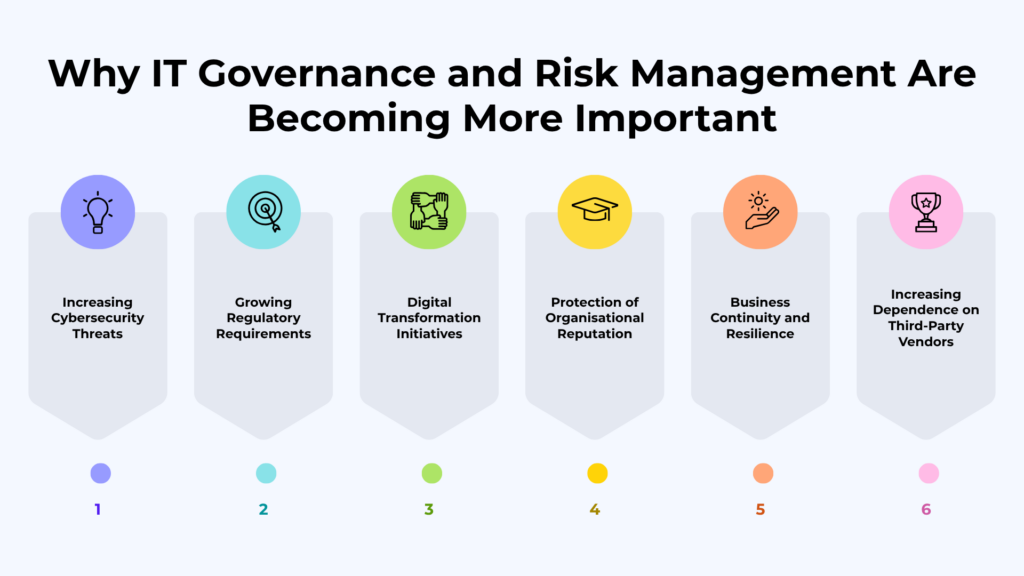
Cyberattacks have become more sophisticated, frequent and costly. Organisations face threats such as ransomware, phishing attacks, insider threats and advanced persistent threats (APTs). Without strong governance and risk management frameworks, businesses may struggle to protect sensitive information and critical systems.
IT Governance ensures that cybersecurity strategies are aligned with business priorities, while Risk Management helps identify vulnerabilities and implement appropriate safeguards.
Governments and regulatory bodies worldwide have introduced stricter data protection and privacy regulations. Organisations must comply with various standards and legal requirements related to data handling, cybersecurity and information management.
Failure to comply can result in financial penalties, legal consequences and reputational damage. Effective governance frameworks help establish accountability and ensure compliance with applicable regulations.
Organizations are increasingly adopting cloud computing, artificial intelligence, automation and Internet of Things (IoT) technologies. While these innovations create opportunities for growth, they also introduce new risks and complexities.
IT Governance provides a structured approach to evaluating technology investments, while Risk Management ensures that emerging risks are identified and addressed throughout the digital transformation journey.
A single cybersecurity incident or technology failure can significantly damage an organisation’s reputation. Customers, investors and business partners expect organisations to safeguard sensitive information and maintain reliable services.
Strong governance and risk management practices demonstrate organisational commitment to security, compliance and operational excellence, helping to build and maintain stakeholder trust.
Unexpected events such as cyberattacks, natural disasters, system outages or supply chain disruptions can severely impact business operations. Organisations must be prepared to respond quickly and effectively.
Risk Management supports the development of business continuity and disaster recovery plans, while IT Governance ensures that resilience strategies receive appropriate oversight and resources.
Modern organisations often rely on external service providers, cloud platforms and technology partners. While these relationships offer benefits, they also introduce third-party risks.
Effective governance frameworks establish vendor management policies and oversight mechanisms. Risk Management processes evaluate supplier risks and ensure appropriate controls are implemented to protect organisational interests.
Benefits of Effective IT Governance and Risk Management
Organisations that invest in robust IT Governance and Risk Management programs can realise numerous benefits, including:
These benefits contribute to long-term organisational success and competitive advantage.
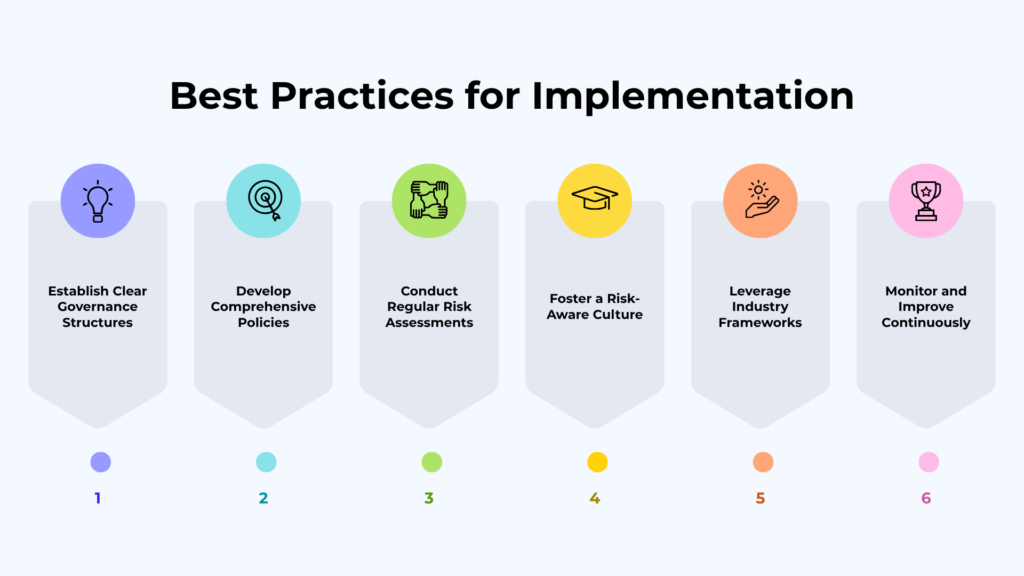
Best Practices for Implementation
To strengthen IT Governance and Risk Management, organisations should consider the following best practices:
Define roles, responsibilities and decision-making authorities for IT-related activities. Executive leadership should actively participate in governance initiatives.
Create policies and standards that address cybersecurity, data protection, risk management and technology usage.
Continuously evaluate threats, vulnerabilities and business impacts to maintain an accurate understanding of the organisation’s risk landscape.
Employees play a critical role in managing risks. Organisations should provide ongoing training and awareness programs to promote responsible behaviour and informed decision-making.
Adopt recognised frameworks such as COBIT, ISO 27001, NIST Cybersecurity Framework and ITIL to establish structured governance and risk management practices.
Technology and risks evolve rapidly. Organisations should regularly review governance processes, measure performance and implement improvements as needed.
Conclusion
As technology becomes increasingly central to business operations, the importance of IT Governance and Risk Management continues to grow. Organisations must navigate a complex environment characterised by cyber threats, regulatory demands, digital transformation initiatives and operational risks. By implementing effective governance structures and comprehensive risk management practices, businesses can protect their assets, ensure compliance, enhance resilience and create long-term value.
In an era where technology can determine organisational success or failure, IT Governance and Risk Management are no longer optional, they are essential components of sustainable business strategy and corporate resilience.
Ready to Start Your Journey?
Take advantage of HRDC claims and PERKESO EIS training or self-pay with instalment methods at Infosyte.
Contact us for more information on funding and available courses for each funding method.
Check out our ongoing sales and discounts and register for ISACA courses today.